Ballarat homeowners should know three things before planning a home addition or extension: whether their home and block are suitable, what factors will shape cost and complexity, and whether they have the budget, timeline, and expectations to do the project properly.
If you love where you live but your home no longer fits the way your family lives, an extension may be the right next step, but the right result usually starts with honest, early planning, not a rushed quote request.
Many homeowners in Ballarat are really trying to answer a few bigger questions before they commit. Can our current home actually be extended in a practical way? Will it be worth the cost and disruption? Should we extend, reconfigure, renovate, or consider moving instead? And if we do extend, what kind of budget, planning, and timeline do we need to be realistic about?
That is exactly where careful early planning matters. A well-considered home extension can create more space, improve how your home works, and help you stay in the area you already know and love. But the right outcome depends on far more than simply adding extra square metres. Your block, your existing home, your goals, your budget, and your site constraints all shape what is possible.
This guide is designed to help Ballarat homeowners understand what to consider before planning a home addition or extension, what common mistakes to avoid, what realistic cost expectations look like, and why an early feasibility study or preliminary planning conversation can make the next steps much clearer.
Why do Ballarat homeowners choose a home addition or extension instead of moving?
For many homeowners, the decision to extend starts with a simple reality: the current home is no longer working as well as it once did, but moving is not especially appealing either.
In Ballarat, established families often want to stay close to their current neighbourhood, schools, community, and routines. They may already be in a street or suburb they genuinely value, and the problem is not the location; it is that the house no longer suits the way they live. That makes an addition or extension an attractive option when more space, better functionality, or a more modern layout is needed.
Extending can also be a way to make better use of a property with strong fundamentals, whether that is the block itself, the home’s position, or the character of the existing house. Instead of taking on the cost, stress, and uncertainty of selling, buying, and moving, some homeowners would rather invest in improving what they already have.
Just as importantly, an extension gives homeowners the chance to shape the home around how they live now, rather than how it was originally designed to function. That might mean creating open-plan family space, adding bedrooms, improving indoor-outdoor flow, or making room for changing household needs over time.
Of course, extending is not automatically the right answer in every case. But for many Ballarat homeowners, it becomes the preferred option when the location still works, the property has real potential, and the right planning can unlock a better outcome than moving elsewhere.
WANT AN INSTANT ONLINE ESTIMATE?
What types of home additions and extensions are most common in Ballarat?
Not every extension is trying to solve the same problem. Some homeowners need more family space. Others want to improve layout and functionality. Some are trying to modernise an older home while preserving what they already like about it.
Understanding the most common
types of home extensions can help homeowners identify what kind of project may suit their property and goals.
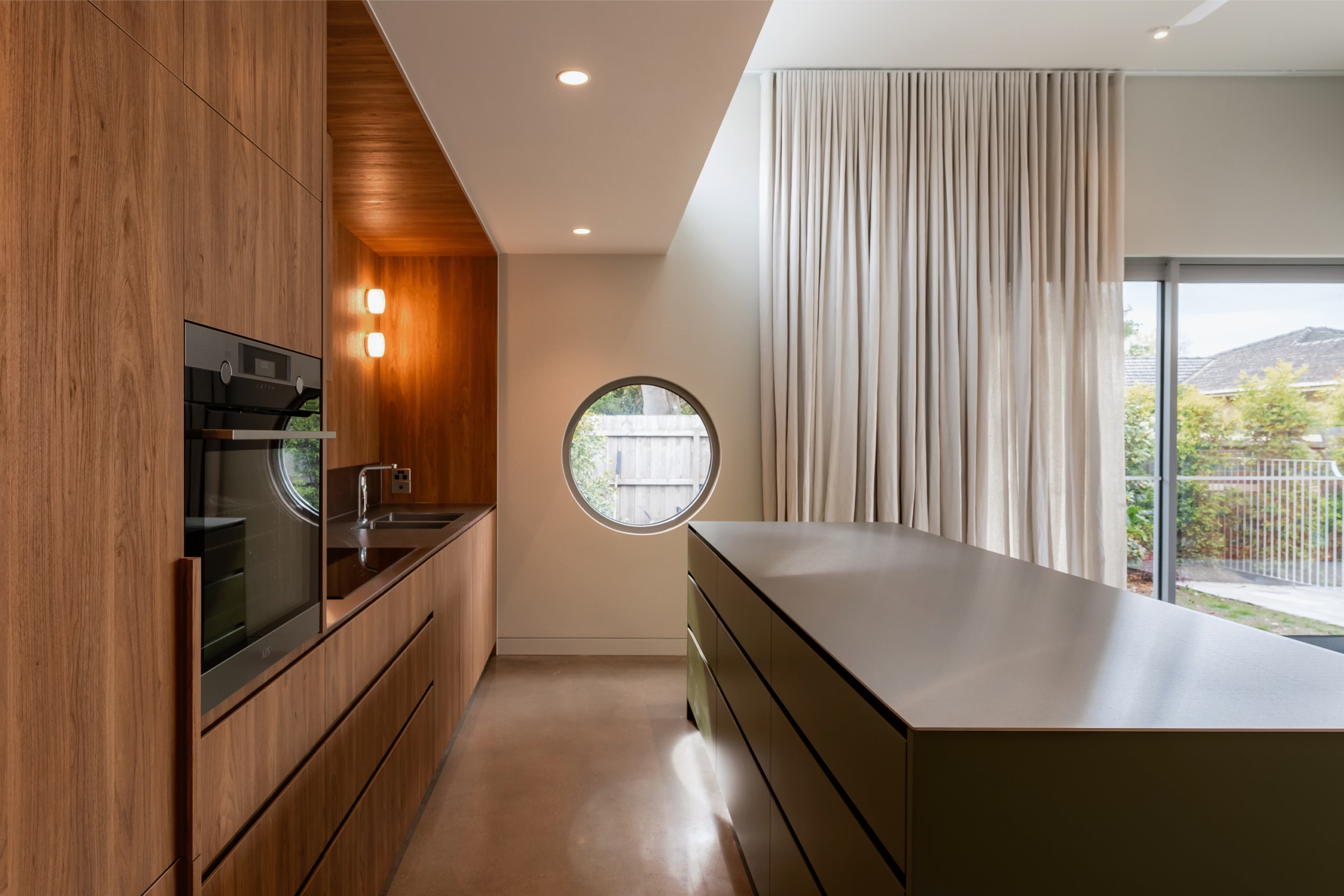
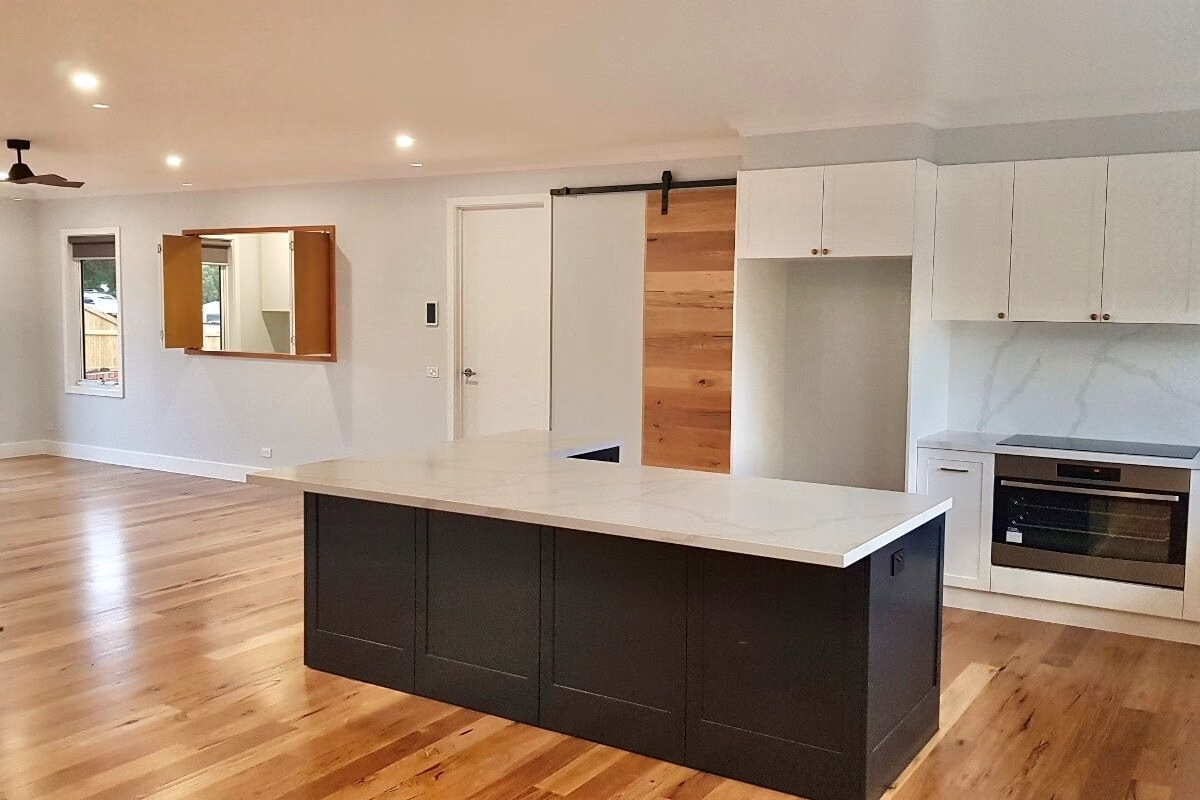
- Rear extensions for open-plan living: Rear extensions are one of the most common options because they can create larger kitchen, dining, and living spaces while keeping the street-facing character of the existing home more intact. For homeowners who feel like the back of the house is too small, disconnected, or outdated, a rear extension can dramatically improve how the home functions day to day.
- Extra bedrooms and family space: Some additions are driven by family growth, changing household needs, or the need for more flexible rooms. That might mean an extra bedroom, a larger family room, a guest space, or a home office. In these cases, the goal is not just more floor area, but a better balance between privacy, practicality, and liveability.
- Second-storey additions: Where block constraints limit outward growth, a second-storey addition may be worth exploring. This can be an effective way to increase usable space while preserving more of the outdoor area. That said, second-storey additions can introduce more structural complexity, design integration challenges, and budget considerations, so they need careful early assessment.
- Extensions that improve layout, light, and functionality: Not every addition is about a dramatic increase in size. In many cases, the most valuable projects are the ones that improve the way the whole home works. An extension can be used to improve circulation, increase natural light, connect internal spaces better, create stronger indoor-outdoor flow, or make the home feel more cohesive and usable overall.
For Ballarat homeowners, the best extension approach depends on the property, the site, and the outcome they actually want to achieve. The right project is not always the biggest one. Often, it is the one that solves the real problem most effectively.
Is your Ballarat home suitable for an extension?
This is often the most important question behind the search, and it is one many homeowners should answer before they go too far into design ideas. Not every home or block is equally suitable for an extension, and early feasibility can save a great deal of time, cost, and frustration later.
One factor is the existing home itself. The current layout, structural condition, and overall configuration all influence what can be added and how well a new space can connect with the old one. Some homes lend themselves naturally to extension. Others may be extended, but only with more compromise, complexity, or cost. The block also matters. Size, slope, access, orientation, setbacks, and usable building area all affect what can realistically be built. A site that seems generous at first glance may still have practical limitations once access, services, overshadowing, or neighbouring properties are considered.
It is also important to think about how the addition will integrate with the existing house. A technically possible extension is not always a good extension. The new works need to support the way the entire home functions, rather than feeling like an awkward attachment that solves one problem while creating others.
This is where early feasibility becomes so valuable. Before detailed drawings begin, homeowners usually benefit from understanding what is likely to work, what key constraints may affect the project, and whether an extension is the best path compared with renovation, reconfiguration, or even rebuilding. For many Ballarat homes, especially older properties or those in more established areas, this early planning stage is when the smartest decisions are made. It helps homeowners move forward with clearer expectations and fewer expensive surprises.
What planning and design factors should you consider before extending?
A successful extension is about more than adding space. It is about improving how the home functions and ensuring the new addition feels well-considered, functional, and connected to the existing house.
One of the first things to clarify is the project’s real goal. Some homeowners focus too quickly on adding extra square metres without fully defining the lifestyle outcome they want. Is the priority more family connection, better entertaining space, more privacy, a better kitchen layout, extra bedrooms, improved storage, or a more comfortable long-term home? Clear goals usually lead to better design decisions.
The relationship between the existing house and the new addition also matters. A well-planned extension should feel cohesive, not disconnected. That does not necessarily mean everything has to match perfectly, but it should feel intentional in both form and function. Natural light, ventilation, and energy efficiency are also important considerations, especially when extending living areas that will be used every day. A bigger home is not automatically a better one if the layout results in darker rooms, poor flow, or uncomfortable interior conditions.
Then there is everyday liveability. Storage, access, circulation, furniture layout, and how people actually move through the home can matter just as much as headline design features. A good extension supports the practical rhythm of daily life, not just the visual impression of extra space.
Finally, homeowners should understand that planning and approval considerations can influence the design earlier than expected. Even at a high level, it helps to know that site conditions, building constraints, and compliance requirements can affect what is realistic. That is why preliminary planning is not just a technical step; it is a way to shape a better outcome from the beginning.
How does the home extension process usually work from idea to construction?
One reason homeowners delay extension projects is that the process can feel uncertain. Breaking it into stages makes it easier to understand and helps set more realistic expectations.
- Initial conversation and project goals: Most projects begin with a conversation about what the homeowner is trying to achieve. This is where the practical goals, frustrations, ideas, and budget considerations start to become clearer. It is not about locking every detail in immediately. It is about understanding the problem properly before jumping into solutions.
- Feasibility study or preliminary planning: This is one of the most important early stages, especially for homeowners who are still weighing up options. A feasibility study or preliminary planning process helps assess whether the proposed extension is likely to succeed, what constraints may affect it, what level of complexity it may involve, and whether there are better alternatives worth considering. This stage often saves time and money in the long run by reducing the risk of pursuing a concept that proves poorly suited to the home, site, or budget.
- Design development and documentation: Once the direction is clearer, the next step is developing the design and preparing the documentation needed for pricing, approvals, and construction planning. This is where ideas become more defined and where practical decisions start to affect scope, buildability, timeline, and cost.
- Approvals, pricing, and construction: After the design and documentation have progressed sufficiently, approvals can be addressed as needed, pricing becomes more informed, and the construction stage can be planned with greater confidence.
For homeowners, the key takeaway is that the best extension projects usually do not begin with guesswork or rushed drawings. They begin with clarity. A straightforward, properly planned process usually leads to fewer surprises later.
How much does a custom extension actually cost in Ballarat?
This is the question many homeowners want answered immediately, and it is better to address it directly than to dance around it.
If you are looking to understand the baseline numbers, reviewing general
home renovation costs in Ballarat is a good start. However, the honest answer is that a quality custom extension requires a realistic budget. If you are comparing builders purely on the cheapest square-metre rate, or hoping to achieve a highly customised outcome on a budget that does not match the scope, you are likely to run into problems long before construction begins.
Custom extensions cost more than many homeowners first expect because they involve more than just adding space. You are paying for thoughtful design, proper documentation, engineering, approvals, structural integration with the existing home, premium materials, experienced trades, and disciplined project management. You are also paying for the mistakes that never happen, because the project was planned properly in the first place.
At
Murphy James Builders, that standard is not just talked about, it is built into the way projects are run. A 605-point quality checklist means less guesswork and tighter control throughout the build. A 6-point guarantee is designed to reduce the risk of unpleasant surprises around quality, cost, and delivery. Those systems do not make a project cheaper upfront, but they can save homeowners from expensive rework, poor coordination, and avoidable frustration later.
If you are still very early in the process and do not yet have plans, clear scope, or a realistic budget range, that does not mean you cannot move forward. It does mean the right next step is usually feasibility or preliminary planning, not asking for a build quote as though the unknowns have already been resolved.
What affects the cost of a home addition or extension?
Cost is one of the biggest questions homeowners have, even when they do not search for it directly. The challenge is that extension costs can vary widely, so broad price claims are often less helpful than understanding what actually drives cost.
Project size and complexity are obvious factors, but they are only part of the picture. Structural work can have a major impact, particularly when the addition involves significant alterations to the existing home or requires more complex engineering.
The condition of the current house can also affect cost. Older homes may involve hidden challenges, upgrades, integration issues, or additional work to make the new and old parts function well together. Materials and finish level matter too. Two projects of similar size can land very differently in cost depending on specifications, detailing, and the level of finish expected.
Site access and services are another important factor. If access is tight, if the site presents logistical challenges, or if existing services create constraints, that can influence build complexity and cost.
Then there is the planning side. Documentation, approvals, design development, and the work required before construction begins all contribute to the total investment. For that reason, homeowners are usually better served by understanding cost drivers early rather than focusing too hard on generic online price ranges. A feasibility study or preliminary planning conversation can help put the likely scope and complexity into a more realistic context before bigger commitments are made.
What mistakes do homeowners commonly make when planning an extension?
A lot of extension stress can be traced back to decisions made too early, too quickly, or without enough practical clarity.
One of the most common mistakes is jumping into design ideas before properly testing whether the concept is feasible. It is easy to get attached to a layout or vision before understanding the actual site, structural, planning, or budget constraints that may shape the project.
Another frequent issue is underestimating complexity. Extensions often involve more than just building something new. They require the new and existing parts of the home to work together properly, and that can introduce challenges around structure, services, approvals, flow, and finish integration.
Some homeowners also focus too heavily on extra space without thinking enough about how the space will function. More area does not necessarily mean a better home if circulation, storage, natural light, or daily usability are compromised. Choosing based purely on upfront price can also create problems. A cheaper option at the start is not always the better path if communication, planning quality, oversight, or buildability are weak.
Finally, many people underestimate how important the connection between the existing home and the addition really is. The most successful extensions tend to feel intentional and integrated, not like separate pieces forced together.
Who we are NOT a good fit for
Not every homeowner is the right fit for Murphy James Builders, and being clear about that early is usually helpful for everyone.
We are probably not the right builder for you if you are looking for the cheapest possible build price and are planning to choose purely on headline cost. We are also not the right fit if you want to rush into construction without proper planning, bypass engineering or approvals, or treat documentation as an optional extra.
Likewise, if you are still hoping a highly customised extension can be delivered on an unrealistic budget, it is better to identify that early than to force the wrong project forward. Quality custom work requires realistic expectations around investment, scope, and timing.
Murphy James Builders is better suited to homeowners who want to do the project properly, value guidance early, and understand that careful planning usually leads to a better result than chasing shortcuts. If that is not where you are yet, the most useful next step may be more research, more clarity around budget, or a better-defined brief before reaching out.
When does a feasibility study or preliminary planning session make sense?
For many homeowners, this is the smartest place to start.
A feasibility study or preliminary planning session makes sense when you know you need a better outcome from your home, but you are not yet certain what form that should take. You may be weighing up an extension against a renovation, reconfiguration, or a complete knockdown and
custom home rebuild. You may have a strong idea of what you want, but no clarity yet on whether it suits the home, site, or budget.
It also makes sense when your property may have constraints that need to be understood early. That could include an older home, a more complex site, access limitations, block-specific issues, or uncertainty about how far the current house can practically be adapted.
Importantly, this early stage is not just about identifying problems. It is about gaining useful direction. A good preliminary planning process can help homeowners understand what is realistic, what may be difficult, where the biggest risks lie, and what the most sensible next step is.
For Ballarat homeowners considering a home addition or extension, this can be a much better first move than rushing into full design work or quote shopping too soon. It creates clarity earlier, which usually leads to better decisions and fewer false starts.
Why Murphy James Builders for a custom extension in Ballarat?
Murphy James Builders is not trying to be the right fit for every extension enquiry in Ballarat. The focus is on homeowners who want a custom project handled properly, with strong planning, close oversight, and clear accountability.
That starts with direct owner involvement. Daniel and Tye are directly involved in every project. That matters because homeowners are not being passed into a faceless volume-building process where responsibility becomes unclear. It creates tighter communication, more consistent oversight, and stronger decision-making throughout the build.
It also shows up in the systems behind the work. Murphy James Builders uses a 605-point quality checklist to reduce guesswork and drive consistency across the project. That is practical proof, not just a branding line. It reflects a process designed to catch issues early, maintain standards, and reduce the kind of misses that often create rework or tension later.
The same applies to the 6-point guarantee. For homeowners, that speaks directly to the fears that often sit underneath an extension project, surprise costs, timeline blowouts, poor communication, and corners being cut. A clear guarantee helps show that the business is serious about reducing those risks, not just hoping they do not happen.
For homeowners who value early planning, realistic expectations, and direct involvement from experienced owners, that combination can make Murphy James Builders a very different choice from a builder competing mainly on price.
Frequently asked questions about home additions and extensions in Ballarat
Conclusion
A home addition or extension can be a smart way to create more space, improve liveability, and stay in the Ballarat area you already enjoy, but the best outcomes usually begin well before construction.
They begin with clarity around what you actually need, whether your home and site suit the project, what realistic budget range you are working with, what constraints may affect the result, and what path makes the most sense before you commit too early to design or cost.
We are best suited to homeowners who want to approach that process seriously. That means being honest about budget, realistic about timeline, and willing to do the groundwork properly before expecting a fixed answer on price or build scope.
If you are considering a home addition or extension in Ballarat and want to have a worthwhile first conversation, come prepared with two things: an honest budget range and a realistic sense of your timeline. If you have that clarity, use our
online estimate and consultation tool as the most practical next step. It can help you understand what is possible, what to watch for, and whether your project is ready to move forward. If you’re ready to discuss the feasibility of your ideas with a builder who values honest, early planning,
contact Murphy James Builders today to schedule a call.