What Should You Expect When Choosing Between Home Addition Types in Ballarat?

You face a critical decision: build out with a ground-floor extension or build up with a second-storey addition. Your block size, existing foundation strength, and local Heritage Overlay rules dictate which option works. Before you spend a dollar on architectural drawings, understand what your property allows. Read our complete guide to home extensions in Ballarat to see the full process from initial concept to final handover.
 
You’ve likely heard horror stories. Homeowners commission $15,000 worth of architectural plans only to discover their Victorian-era stumps won’t support a second storey. If you’ve been quoted one price by a builder and then invoiced another six months later, you understand why honest pricing matters up front. If you’ve dealt with builders who hide costs in provisional sums or blame “unforeseen circumstances” for budget blowouts, our 605-Point Quality Checklist eliminates this problem before you sign a contract.

The Elephant in the Room: What Are the Hidden Costs Wrecking Your Budget?

You need to know where surprise expenses hide before you commit. Ballarat sits on reactive Class H and Class M clay soils. Your slab needs waffle pod engineering or stiffened raft footings. This requirement adds $15,000 to $40,000 to the cost of standard concrete slabs.
 
If your property sits on basalt rock (common in Ballarat East and Sebastopol), excavation becomes expensive fast. Rock saws and hydraulic hammers cost $200 to $400 per hour. We’ve seen properties where rock removal alone added $28,000 to the build cost.
 
Second-storey additions carry different financial traps. Your existing foundation wasn’t engineered to carry upper-floor loads. Homes built before 1990 need structural certification from a registered engineer. The reinforcement work (micro-piles, underpinning, new concrete footings) typically costs $30,000 to $80,000 before framing begins.
 
Pre-1990 homes hide asbestos in eaves and wall cladding. Licensed removal costs $5,000 to $20,000 under Victorian law. Your electrical panel and plumbing must meet current building codes. Upgrading decades-old systems adds $10,000 to $25,000 to your project budget.
Here’s what 90% of homeowners discover too late:
Hidden Cost Factor
Ground-Floor Extension
Second-Storey Addition
Foundation Risks
High (soil testing mandatory)
Low (unless footings fail)
Structural Engineering
Low to Medium
High (full certification required)
Roof Work
Medium (tie-in required)
High (complete removal and rebuild)
Site Access Costs
Low
High (scaffolding and crane hire)
Living Disruption
Low (you stay home)
High (move out 4–6 months)


In Ballarat, your choice between building up or out depends entirely on three factors: your block size, whether you’re under a Heritage Overlay, and your existing foundation capacity.
— Tye & Daniel, Murphy James Builders
 
You’ll understand these variables during Step 3 of our process. You receive a detailed feasibility estimate before signing anything. No provisional sums. No vague allowances. Understanding how much your home extension will cost helps you budget accurately from the beginning.

WANT AN INSTANT ONLINE ESTIMATE?

What Are the Most Common Types of Home Additions in Ballarat?

You have several ways to expand your property. The right structural choice depends on your block dimensions, your existing floor plan, and the local planning rules protecting your street. Review this breakdown of the four most common extension types we build across the region.
 
Type of Addition
How It Works
Best For
Heritage Compatibility
Ground-Floor Rear Extension
Extending the back of the house straight into the yard.
Large blocks. Single-storey living. Families wanting open-plan kitchen/dining flow to the outdoors.
High. Easily hidden behind the original facade.
Second-Storey Addition
Removing the roof and building an upper level over the existing footprint.
Blocks under 600m². Preserving backyards. Gaining views and separating bedrooms from living areas.
Medium. Requires careful roofline design to stay hidden from the street.
Side Return Extension
Pushing a side wall out to the boundary line to reclaim unused alleyways.
Victorian and Edwardian terraces. Widening narrow galley kitchens or adding an extra bathroom.
High. Rarely alters the primary streetscape.
Linked Pavilion (The “Pod”)
Building a separate modern structure in the yard, connected to the old house by a hallway.
Strict Heritage Overlays. Creating a clear break between old and new architecture.
Very High. Leaves the original heritage roofline completely untouched.

Is Building Out Better Than Building Up for Your Property?

Your property dictates the answer. Building out adds square metres to your ground-floor footprint. Building up places a new living space above your existing structure. Your lifestyle needs and physical constraints determine which option works.
 

When Building Out Makes Sense

You spend less per square metre. Ground-floor extensions cost $3,500-$5,000/m² for high-quality custom work in Ballarat. You avoid roof removal and full-perimeter scaffolding. Construction happens faster because weather delays don’t halt progress on an exposed upper level.
 
You stay at home for most of the build. We section off the work area. Your family lives in the front rooms while we construct the rear extension. This approach saves you $15,000 to $30,000 in rental costs over six months.
 
Your elderly parents or young children permanently avoid stairs. Horizontal flow from the kitchen to the outdoor entertaining areas suits families who use their backyard daily. You maintain single-storey accessibility for aging in place over the next 20 years.
 
However, you sacrifice outdoor living space. On blocks under 600m² (common in Ballarat Central and Golden Point), a 100m² ground-floor extension consumes 60% to 80% of your backyard. Your children lose play space. You eliminate the garden that initially attracted you to the property.
 
You also face excavation risks. Soil testing reveals problems after you’ve committed to the design. If you hit rock or poor drainage, costs escalate quickly. Waterproofing a below-ground extension in Ballarat’s clay soils requires specialised membrane systems.
 

When Building Up Makes Sense

You preserve your backyard completely. A second storey adds 100 m² of living space without encroaching on your garden. This matters significantly on smaller blocks where outdoor space defines your family’s lifestyle and daily routines.
 
You create a natural separation between living and sleeping zones. Your teenagers gain privacy upstairs while you host dinner parties downstairs without noise disruption. Parents maintain adult space while young adults occupy ground-floor bedrooms. Morning routines don’t wake sleeping family members when bathrooms and bedrooms are spread across two levels.
 
If your property offers views of Lake Wendouree, the Ballarat hills, or tree canopies, a second level captures this value. Natural light improves dramatically on the upper floor. You avoid the overshadowing issues ground-floor extensions face from neighbouring fences and buildings.
You’re creating the home where your family gathers for the next 20 years. Your children grow up here. Your grandchildren visit here. The investment isn’t just financial—it’s about building a legacy home without having to move to the suburbs.
 
According to our 15+ years of building in Ballarat, 85% of well-executed second-storey additions in premium suburbs (Invermay Park, Soldiers Hill, Lake Gardens) increase property value by $300,000 to $500,000. You recoup your investment when selling while enjoying the lifestyle benefits for decades.
 
However, second-storey additions cost 30% to 50% more per square metre. Scaffolding, crane hire, roof removal, and structural engineering drive up the price. You’ll spend $5,000 to $7,500/m² for the same quality finishes you’d get in a ground-floor extension.
 
You must move out during construction. Roof removal creates a weather-exposed phase. We can’t guarantee exact timelines because weather delays are beyond anyone’s control. Budget for 4 to 6 months of rental accommodation. Stairs consume 10 to 12 square metres of valuable floor space on both levels, reducing your net usable area.


If your block is under 600m² and you’re in Ballarat Central, building up is often the only way to add 100m² without losing your entire backyard.
— Tye & Daniel, Murphy James Builders
Will the City of Ballarat Actually Approve Your Addition?

You need council approval before construction begins. This is where most projects fail or face expensive redesigns. Heritage Overlays are your first constraint. If your property sits within a Heritage Overlay zone covering Central Ballarat, Soldiers Hill, or Lake Wendouree, you need a Planning Permit before a Building Permit gets issued.
 
Here’s the reality: most architects don’t explain upfront that you’re allowed to build modern extensions on Victorian-era homes. The City of Ballarat doesn’t require faux heritage replication. Council officers prefer contemporary additions clearly distinct from the original structure.
 
Your new addition must remain invisible from the primary street frontage. The front facade is protected strictly. Rear and side additions receive far more design flexibility. If your architect draws a second-storey balcony visible from the street, the council rejects it. You’ll understand these constraints during your initial consultation with us, before your architect finalises drawings.
 
Planning Permits take 4 to 8 weeks if neighbours don’t object. If someone lodges an objection or council requests design amendments, your timeline extends to 12+ weeks. Understanding what to expect during the home extension process helps you plan for these potential delays without derailing your entire project timeline.
 
Properties near Daylesford or Creswick trigger Bushfire Management Overlays. Your addition must meet Bushfire Attack Level (BAL) ratings. BAL-12.5 or BAL-29 ratings dictate your cladding materials, glazing specifications, and decking choices. Non-compliant timber cladding or standard glass gets rejected during the permit process.
 
Building Permits are mandatory for all extensions, regardless of size. This ensures your build complies with the National Construction Code, which covers structural integrity, fire safety, and energy efficiency (with a minimum 6-star rating in Victoria). Building permits cost $2,000 to $5,000, depending on project value.
 
Your property title may contain restrictive covenants. Some Ballarat subdivisions (particularly newer estates in Alfredton, Lucas, and Delacombe) limit building height, exterior colours, or cladding materials. You’ll discover these restrictions during your Plans & Estimate phase with us, not after you’ve spent $15,000 on unusable architectural drawings.


60% of Ballarat extensions require Heritage Overlay approvals. We identify these requirements during the initial site assessment, not halfway through your architectural design process.
— Tye & Daniel, Murphy James Builders

How We Approach Heritage Extensions: A Look at Our Latrobe Street Project
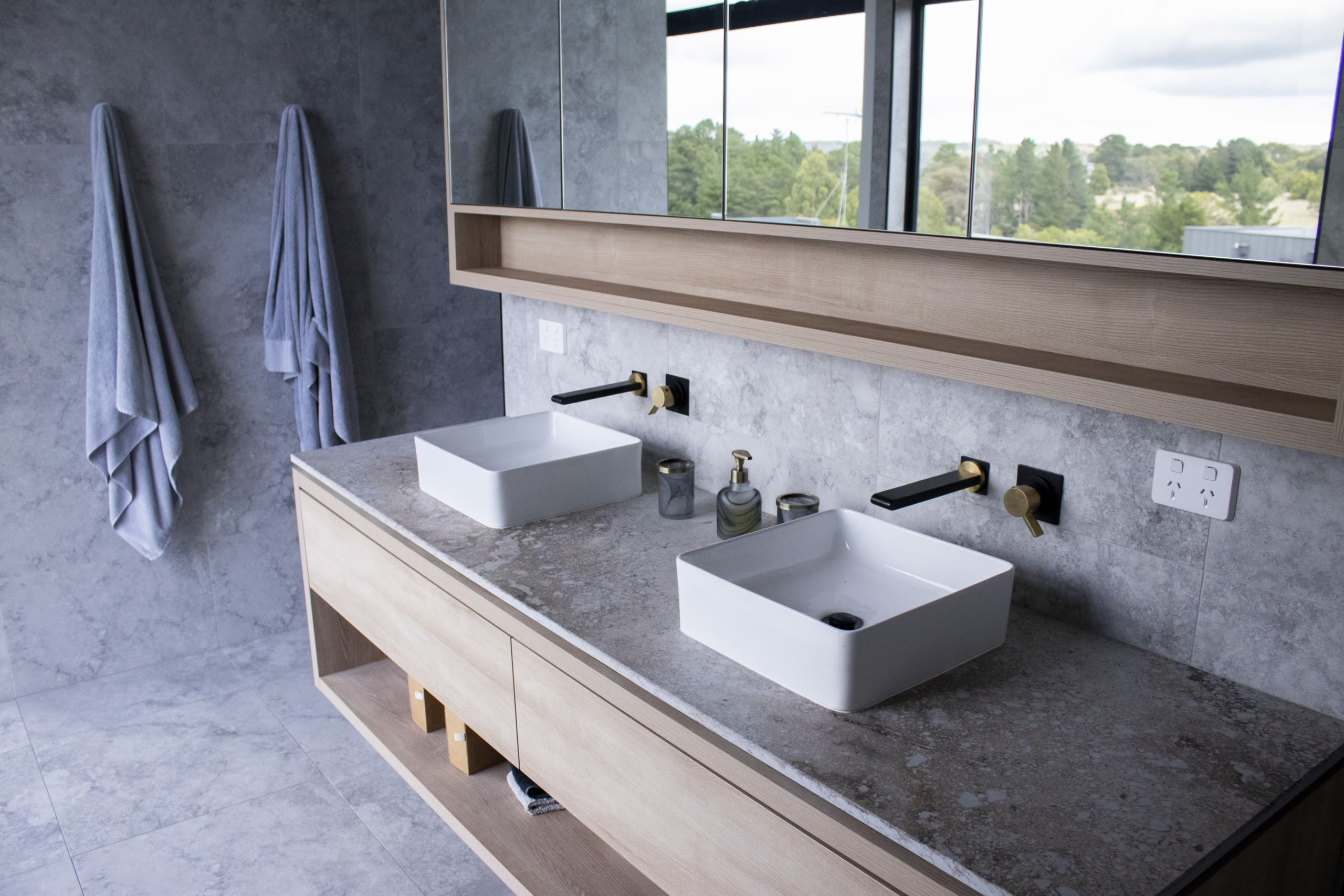
When clients come to us with period homes in Ballarat, the decision to build out requires a delicate balance. You must modernise the home for your family’s lifestyle while satisfying the City of Ballarat’s strict heritage requirements.
 
Our Latrobe Street project is a perfect example of this reality. The clients owned a beautiful heritage home that lacked the functional, open-plan space modern families require. They didn’t want to build a second storey, which would have required massive structural reinforcement to the original period footings and complete roof removal. Instead, they opted for a ground-floor rear extension.
 
During the Plans & Estimate phase, you’ll see how we approach material selection to satisfy both budget and council constraints. For Latrobe Street, the architects designed a confident, contemporary addition that extended the ground floor into the rear yard. To ensure the new structure was clearly distinct from the original heritage home—a key requirement for Heritage Overlay approvals—the addition utilised modern metal cladding contrasting with traditional brick veneer.
 
Building out allowed the clients to stay on a single level, creating a seamless flow from the original heritage hallway into a light-filled, modern living and dining space. Because we built out rather than up, the clients avoided the $30,000+ cost of structural underpinning that a second storey would have demanded.
 
The outcome is a respectful transformation that elevates the home without erasing its history. The streetscape remains perfectly preserved, satisfying council requirements, while the clients gained the modern, open-plan lifestyle they wanted at the rear.
 
That’s the outcome you get when your builder coordinates with your architect, understands local council requirements, and prices honestly before you sign anything. See the full gallery of this transformation and our other completed works on our projects page.

If Your Architect Has Already Drawn Plans

If your architect has already drawn plans and you need a builder who won’t surprise you with cost overruns during construction, understanding our quality guarantee process shows you how we eliminate guesswork from the feasibility stage. Many of our best clients come to us through architect referrals because we coordinate seamlessly with design professionals who value honest pricing and transparent communication.
 
You’ll receive a detailed breakdown of costs during the Plans & Estimate phase. If your architect designed a $900,000 extension but your budget is $600,000, you’ll know immediately—not six months into construction when it’s too late to adjust. We modify the scope together or recommend staging the project in phases so you build what you actually afford.

Frequently Asked Questions

For a ground-floor rear extension, you usually stay in the front rooms during construction. We section off the work area so your family maintains normal routines. For a second-storey addition, you must move out for four to six months. Roof removal makes the house uninhabitable until we weatherproof the upper level.

Building out costs less per square metre. Ground-floor extensions range from $3,500 to $5,000/m² for custom work. Building up costs 30% to 50% more due to scaffolding, structural engineering, roof removal, and crane hire. Your existing foundation also requires expensive reinforcement for upper-floor loads.

Custom second-storey additions start at $500,000 for quality work with premium finishes. Complex engineering requirements and foundation upgrades drive the price higher. Properties requiring significant structural reinforcement often exceed $600,000 for a 100m² upper level.

No. The City of Ballarat approves contemporary additions on period homes regularly. Your new structure must remain hidden from the primary street frontage. The council protects the front facade but allows modern design at the rear and sides.

Rock removal adds significant cost. Basalt deposits sit close to the surface in parts of Ballarat East, Sebastopol, and Soldiers Hill. Hydraulic hammers and rock saws cost $200 to $400 per hour. You’ll receive accurate pricing during your Plans & Estimate phase, before construction begins—not after we start digging.

Conclusion

Your block size dictates your best option. Blocks under 600m² in Ballarat Central, Bakery Hill, and Golden Point typically require second-storey additions to preserve outdoor space where your children play and you entertain family. Larger blocks in Sebastopol, Delacombe, and Alfredton suit ground-floor extensions perfectly.
 
You must account for soil conditions, structural capacity, and Heritage Overlay constraints before your architect finalises drawings. These aren’t optional considerations. They’re legal and engineering requirements determining what the City of Ballarat approves and what your foundation supports safely.
 
The hidden costs (soil testing, rock excavation, structural reinforcement, asbestos removal, bushfire compliance) add $30,000 to $80,000+ to your budget. You’ll understand these factors during the Plans & Estimate phase with us, before you commit to a contract.
 
You’ve researched for months. You’ve watched costs rise while you waited. Imagine hosting family gatherings in a light-filled extension where your children play in a preserved backyard and you cook in a kitchen designed for how you actually live. That’s what happens when you choose the right addition type for your property and work with builders who tell you the truth upfront.
 
Ready to get clarity on what’s actually possible for your property? Book a call with us and we’ll walk you through your options with complete transparency.

Table of Contents